Nutrition Respiration Transportation Excretion 6CO₂+6H₂O → C₆H₁₂O₆+6O₂ (Photosynthesis — light + chlorophyll) C₆H₁₂O₆+6O₂ → 6CO₂+6H₂O (Aerobic respiration) Right side → lungs (pulmonary) Left side → body (systemic)
Chapter 5  ·  Class X Science

Nutrition, Respiration, Transportation, and Excretion in Living Organisms

Life Processes

How Every Cell Survives — The Four Essential Processes of Life

Chapter Snapshot

15Concepts
5Formulae / Reactions
12–14%Exam Weight
6–7Avg Q's
Moderate-HighDifficulty

Why This Chapter Matters for Exams

CBSE BoardNTSEState Boards

Life Processes is the highest-weightage biology chapter in Class X, contributing 12–14 marks in CBSE Boards. Diagram-based questions (stomata, nephron, heart, villi) are guaranteed 3–5 mark questions. Autotrophic vs heterotrophic nutrition, types of respiration, and the double circulatory system are standard short-answer topics. NTSE includes process-comparison MCQs.

Key Concept Highlights

What are Life Processes?
Nutrition: Autotrophic (Photosynthesis)
Nutrition: Heterotrophic (Holozoic, Parasitic, Saprophytic)
Photosynthesis — Mechanism and Equation
Nutrition in Human Beings (Alimentary Canal)
Respiration: Aerobic and Anaerobic
Respiration in Plants
Breakdown of Glucose — Glycolysis
Transportation in Plants (Xylem, Phloem)
Transportation in Animals (Circulatory System)
Double Circulation in Humans
Lymphatic System
Excretion in Plants
Excretion in Humans (Nephron, Kidney)
Artificial Kidney (Dialysis)

Important Formulae & Reactions

$6CO_2 + 6H_2O \xrightarrow{\text{light, chlorophyll}} C_6H_{12}O_6 + 6O_2$
$C_6H_{12}O_6 + 6O_2 \rightarrow 6CO_2 + 6H_2O + \text{energy (ATP)}$
$\text{Anaerobic (yeast): }C_6H_{12}O_6 \rightarrow 2C_2H_5OH + 2CO_2$
$\text{Anaerobic (muscle): }C_6H_{12}O_6 \rightarrow 2C_3H_6O_3\ (\text{lactic acid})$
$\text{Urea synthesis: NH}_3 + CO_2 \rightarrow \text{urea (liver)}$

What You Will Learn

Navigate to Chapter Resources

🏆 Exam Strategy & Preparation Tips

Diagram practice is essential — draw and label the nephron, heart, and alimentary canal at least 5 times each. For CBSE, "describe the process of ..." questions follow a fixed structure: definition → steps → significance. The double circulation pathway (right side = pulmonary, left side = systemic) is a very common 3-mark question. Time investment: 5–6 days.

Chapter 5 · CBSE Class X
🧬
Life Processes
What are Life Processes? Nutrition (Autotrophic & Heterotrophic) Photosynthesis Nutrition in Human Beings Respiration (Aerobic & Anaerobic) Human Respiratory System Transportation in Humans (Circulatory System) Transportation in Plants (Xylem & Phloem) Excretion in Human Beings Excretion in Plants CBSE Class 10 NCERT Science
🧬 Introduction
Life processes are essential physiological activities that maintain life by ensuring energy production, growth, repair, and homeostasis in living organisms.
📘 Definition
🔄 Process

Core Life Processes

  • 1
    Nutrition
    Intake and utilization of food for energy and growth.
  • 2
    Respiration
    Oxidation of food (glucose) to release energy.
  • 3
    Transportation
    Movement of substances like nutrients, gases, and wastes.
  • 4
    Excretion
    Removal of metabolic waste products.
  • 5
    Reproduction
    Formation of new individuals (not essential for survival but for species continuity).
💡 Concept

Metabolism

🎨 SVG Diagram
Life Processes Nutrition Fueling Life Respiration Energy Flow Transport Circulation Excretion Purification Reproduction Continuity
⚗️ Chemical Equation

Aerobic respiration equation

Aerobic respiration equation
C6H12O6 + 6O2 6CO2 + 6H2O + Energy (ATP)
✏️ Example
Autotrophs like plants make food via photosynthesis, while heterotrophs like humans depend on external food sources.
Why is respiration classified as an essential life process?
Food → Digestion → Absorption → Respiration → ATP/Energy → Life Activities
Respiration breaks down glucose to release energy (ATP) needed for all cellular functions, growth, and maintenance.
🌟 Importance
⚠️ Warning
📋 Case Study

A person stops breathing but the heart is still beating for a short time. Which life process fails first and what will be the consequence?

Answer: Respiration fails first → Oxygen supply stops → Cells cannot produce ATP → leads to death.

⚡ Exam Tip
🧬
Nutrition
📖 Introduction
📘 Definition
🗂️ Types / Category

Types of Nutrition

  • Autotrophic Nutrition Organisms synthesize their own food from inorganic substances.
  • Heterotrophic Nutrition Organisms depend on other organisms for food.
📘 Definition

Autotrophic Nutrition

🎨 SVG Diagram
Photosynthesis
Process of Photosynthesis Chloroplast 6 CO₂ 6 H₂O Sunlight 6 O₂ 6 O₂ C₆H₁₂O₆ (Glucose) 6CO₂ + 6H₂O + Light ──→ C₆H₁₂O₆ + 6O₂
⚗️ Chemical Equation

Photosynthesis Equation

Photosynthesis Equation
6CO2 + 6H2O C6H12O6 + 6O2 (in presence of sunlight & chlorophyll)
📘 Definition

Chemosynthetic Autotrophs

✏️ Example
Examples & Concept Application
Why are green plants called producers in a food chain?
Green plants are producers because they synthesize their own food from simple inorganic substances using sunlight and chlorophyll through photosynthesis.
Sunlight + CO₂ + H₂O → Glucose + O₂ (Photosynthesis) → ATP + Energy for growth
🌟 Importance
⚠️ Warning
common Mistakes
⚡ Exam Tip
⚡ Exam Tip
🧬
Process of Photosynthesis
📖 Introduction
📘 Definition
⚗️ Chemical Equation
⚗️ Photosynthesis✔ Balanced
$$6CO_2 + 6H_2O \xrightarrow{\text{Sunlight, Chlorophyll}} \underset{\text{Glucose}}{C_6H_{12}O_6} + 6O_2$$
📌 Note
🔄 Process

Stepwise Mechanism

  • 1
    Light Absorption
    Chlorophyll a/b absorbs photons (blue: 430-450nm, red: 660-680nm) in photosystems PSI/II
  • 2
    Photolysis of Water
    Water splits at PSII: \(\small\mathrm{2H_2O \rightarrow 4H^+ + 4e^- + O_2}\) (manganese complex)
  • 3
    ATP & NADPH Formation
    Electrons → ETC → ATP (photophosphorylation) + NADPH (PSI reduction)
  • 4
    Carbon Fixation
    Calvin cycle in stroma: RuBP + CO₂ → PGA → Glucose \(\small\mathrm{(6CO_2 + 18ATP + 12NADPH})\)
🎨 SVG Diagram
Chloroplast Structure Light Reaction (in Thylakoids) Dark Reaction (in Stroma) Sunlight H₂O CO₂ O₂ (Oxygen) Glucose ATP / NADPH ADP / NADP+
🧬 Special Case

Special Adaptation: CAM Plants (Xerophytes)

Desert plants like cactus show Crassulacean Acid Metabolism (CAM):

\[ CO_2 + H_2O \xrightarrow{\text{Night}} \text{Malic Acid} \] \[ \text{Malic Acid} \xrightarrow{\text{Day + Sunlight}} C_6H_{12}O_6 \]

This adaptation helps in reducing water loss in extreme environments.

🌟 Importance
Why Photosynthesis is Important
📋 Case Study

A plant is exposed to green light only. Predict the rate of photosynthesis.

Answer: Very low, because chlorophyll reflects green light and absorbs mainly red and blue wavelengths.

⚠️ Warning
Common Mistakes
⚡ Exam Tip
🧬
Stomata
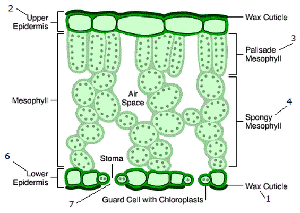
🎨 SVG Diagram
cross section of a leaf showing stomata
Cross Section of Leaf Showing Stomata

Stomata are microscopic pores present on the epidermis of leaves that regulate gaseous exchange and transpiration in plants.

📘 Definition
🧬 Structure Of Stomata
  • Stomatal Pore: Opening for gas exchange.
  • Guard Cells: Kidney-shaped cells controlling opening and closing.
  • Chloroplasts: Present in guard cells (unlike other epidermal cells).
🎨 SVG Diagram
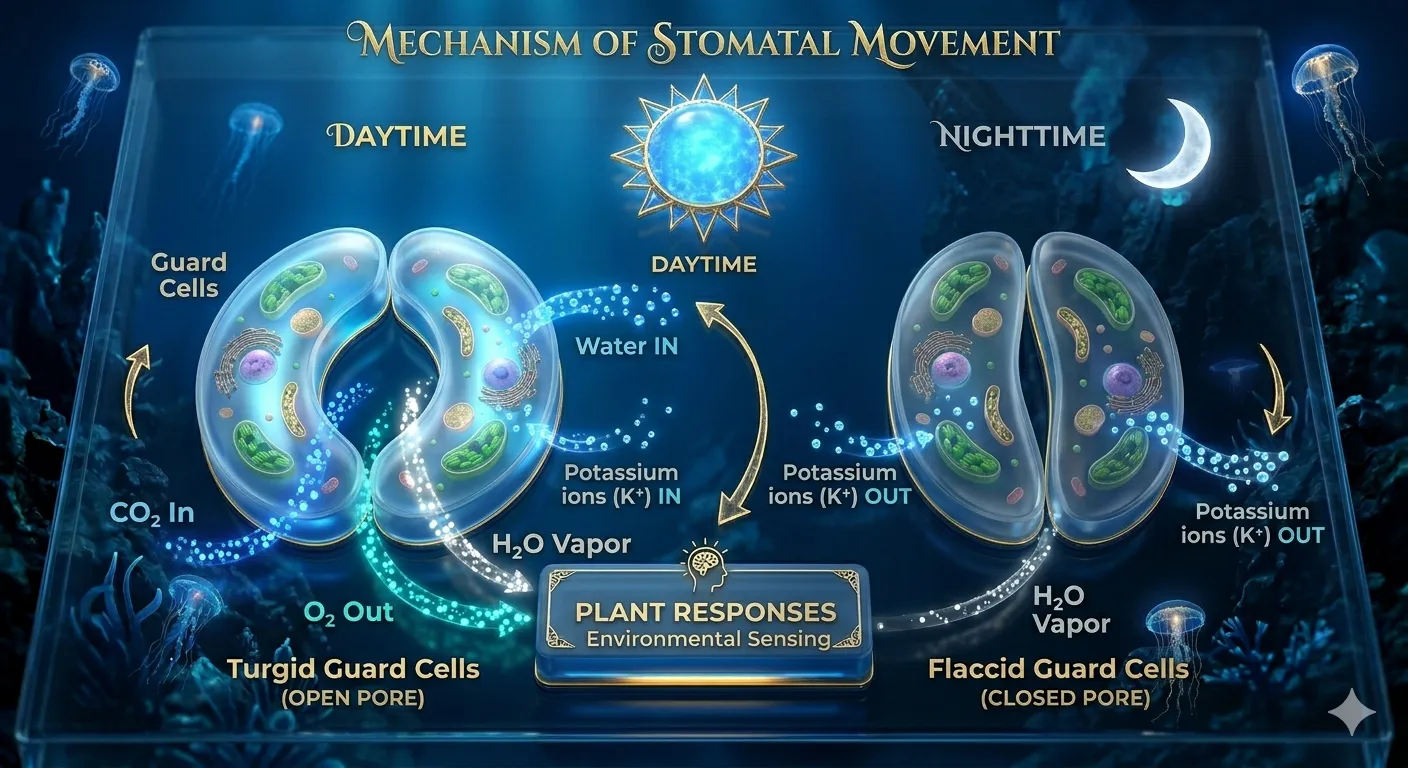
Mechanism of Stomata Movement
🔄 Process
Opening and Closing Mechanism
  • 1
    Opening Mechanism
    Low CO₂ → K⁺ ions actively pumped into guard cells → Water enters by osmosis → Turgid (bulging outer wall) → Pore opens
  • 2
    Closing Mechanism
    High CO₂/ABA → K⁺ ions exit guard cells → Water leaves by osmosis → Flaccid → Pore closes
  • 3
    Regulation Factors
    Triggers: Low CO₂, blue light, low humidity | Inhibitors: High CO₂, ABA hormone, darkness
🌱 Functions of Stomata
Functions of Stomata
  • Gas Exchange: CO₂ entry for photosynthesis, O₂ exit during respiration
  • Transpiration: Water vapor loss creates transpiration pull for xylem transport
  • Turgor Regulation: Controls water balance and maintains cell rigidity
  • Temperature Control: Evaporative cooling prevents overheating
✏️ Example
Why do stomata close during hot afternoons even when the plant needs CO₂ for photosynthesis?
During hot afternoons, plants lose too much water through transpiration. To prevent dehydration, ABA hormone is produced. This hormone makes potassium ions leave the guard cells. Guard cells lose water and become flaccid, closing the stomatal pore to conserve water.
Plants prioritize water conservation over photosynthesis during hot afternoons. CAM plants solve this by keeping stomata open at night and closed during the day.
🌟 Importance
⚠️ Warning
Common Mistakes
📋 Case Study

A plant kept in humid conditions shows reduced transpiration. Predict stomatal behavior.

Answer: Stomata remain more open as water loss risk is low.

⚡ Exam Tip
🧬
Heterotrophic Nutrition
📖 Introduction
📘 Definition
✏️ Example

Examples of Heterotrophs

  • All animals (including humans)
  • Fungi (e.g., mushrooms, yeast)
  • Non-photosynthetic plants (e.g., Cuscuta)
🗂️ Types / Category

Types of Heterotrophic Nutrition

Holozoic Nutrition
Organisms take complex solid/liquid food into body, then digest, absorb, assimilate and egest undigested waste. Amoeba and humans follow this step-by-step process.
Saprophytic Nutrition
Organisms feed on dead decaying organic matter by secreting digestive enzymes outside body. Fungi and some bacteria break down dead leaves, wood using extracellular digestion.
Parasitic Nutrition
Organisms live on or inside host organism and absorb digested food directly from host body. Tapeworm in human intestine and cuscuta on plants are common examples.
🎨 SVG Diagram
Heterotrophic Nutrition FOOD SOURCES Holozoic Ingestion of Solid/Liquid food Saprophytic Feeding on Dead/Decaying matter Parasitic Lives on/in Host organisms
🔄 Process

Process (Holozoic Nutrition)

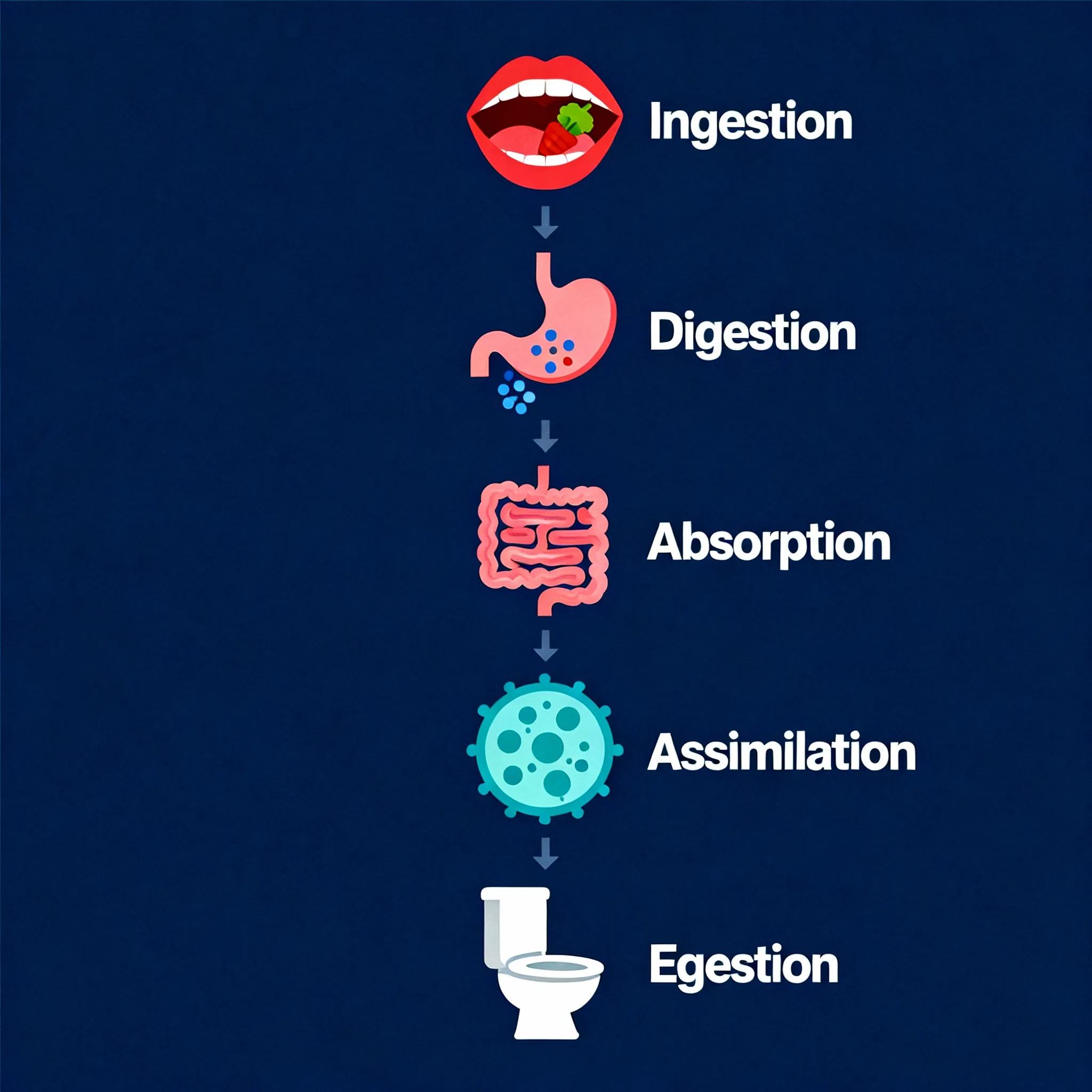
  • 1
    Ingestion
    Taking food into body through mouth (humans) or pseudopodia (Amoeba).
  • 2
    Digestion
    Breaking complex food into simple soluble molecules using enzymes.
  • 3
    Absorption
    Simple molecules pass through intestinal wall into blood.
  • 4
    Assimilation
    Absorbed food used by body cells for energy, growth, repair.
  • 5
    Egestion
    Removal of undigested, unabsorbed waste from body.
🌟 Importance
📋 Case Study

A fungus grows on dead organic matter and secretes enzymes outside its body. Identify the type of nutrition.

Answer: Saprophytic nutrition (extracellular digestion).

⚠️ Warning
Common Mistakes
⚡ Exam Tip
🧬
Nutrition in Amoeba
🖼️ Figure
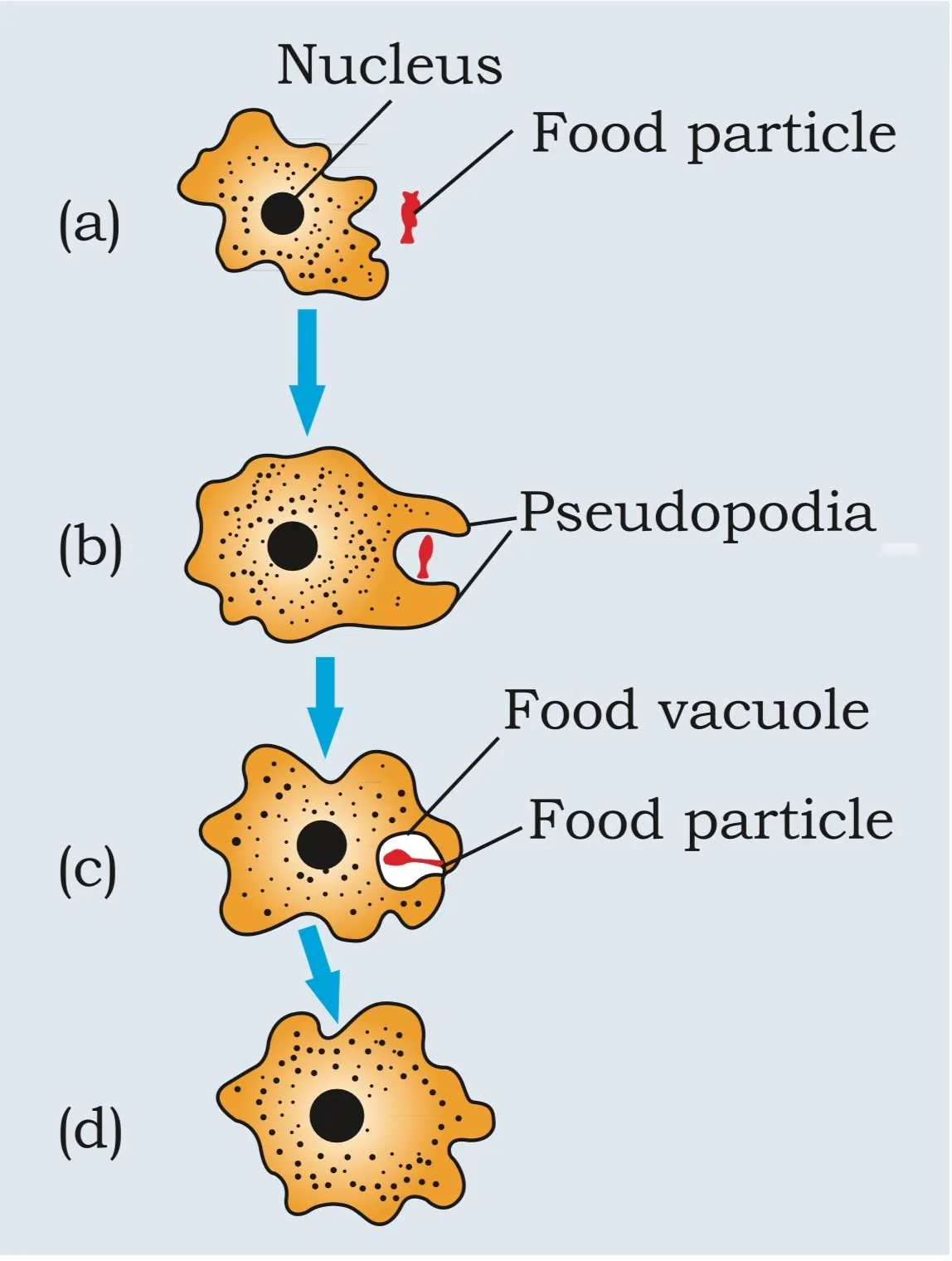
Holozoic Nutrition in Amoeba

Amoeba shows holozoic nutrition in which food is ingested, digested, and absorbed within a single cell using specialized structures.

Nutrition in Amoeba
Nutrition in Amoeba
📘 Definition
🔄 Process

Stepwise Process

  • 1
    Ingestion
    Pseudopodia surround food (phagocytosis).
  • 2
    Digestion
    Enzymes act inside food vacuole.
  • 3
    Absorption
    Nutrients diffuse into cytoplasm.
  • 4
    Assimilation
    Used for energy and growth.
  • 5
    Egestion
    Waste expelled through cell membrane.
💡 Concept
Key Concept
📋 Case Study

Question: Why is amoeba digestion called intracellular?

Answer: Because digestion occurs inside the food vacuole within the cell.

📘 Definition

Nutrition in Human Beings

🖼️ Figure
Human Digestive System
🔄 Process

Stepwise Process

  • 1
    Ingestion
    Intake of food through mouth.
  • 2
    Digestion
    Breakdown of complex food by enzymes.
  • 3
    Absorption
    Nutrients absorbed in small intestine (villi). diffuse into cytoplasm.
  • 4
    Assimilation
    Utilization by cells.
  • 5
    Egestion
    Removal of undigested waste.
📊 Comparison Table

Important Digestive Enzymes

Organ Enzyme Function
Mouth Salivary Amylase Breaks starch into maltose sugar using salivary glands.
Stomach Pepsin Converts proteins into smaller peptide chains in acidic medium.
Pancreas Trypsin Further digests peptides into simple amino acids.
Small Intestine Lipase Splits emulsified fats into fatty acids and glycerol.
🌟 Importance
⚠️ Warning
Common Mistakes
📋 Case Study

A person has damaged villi in the small intestine. What will be the effect?

Answer: Absorption of nutrients will decrease, leading to malnutrition.

⚡ Exam Tip
🧬
Human Digestive Process (Nutrition Pathway)
🖼️ Figure
The human digestive process is a stepwise transformation of complex food into absorbable nutrients, involving mechanical and chemical digestion followed by absorption and egestion.
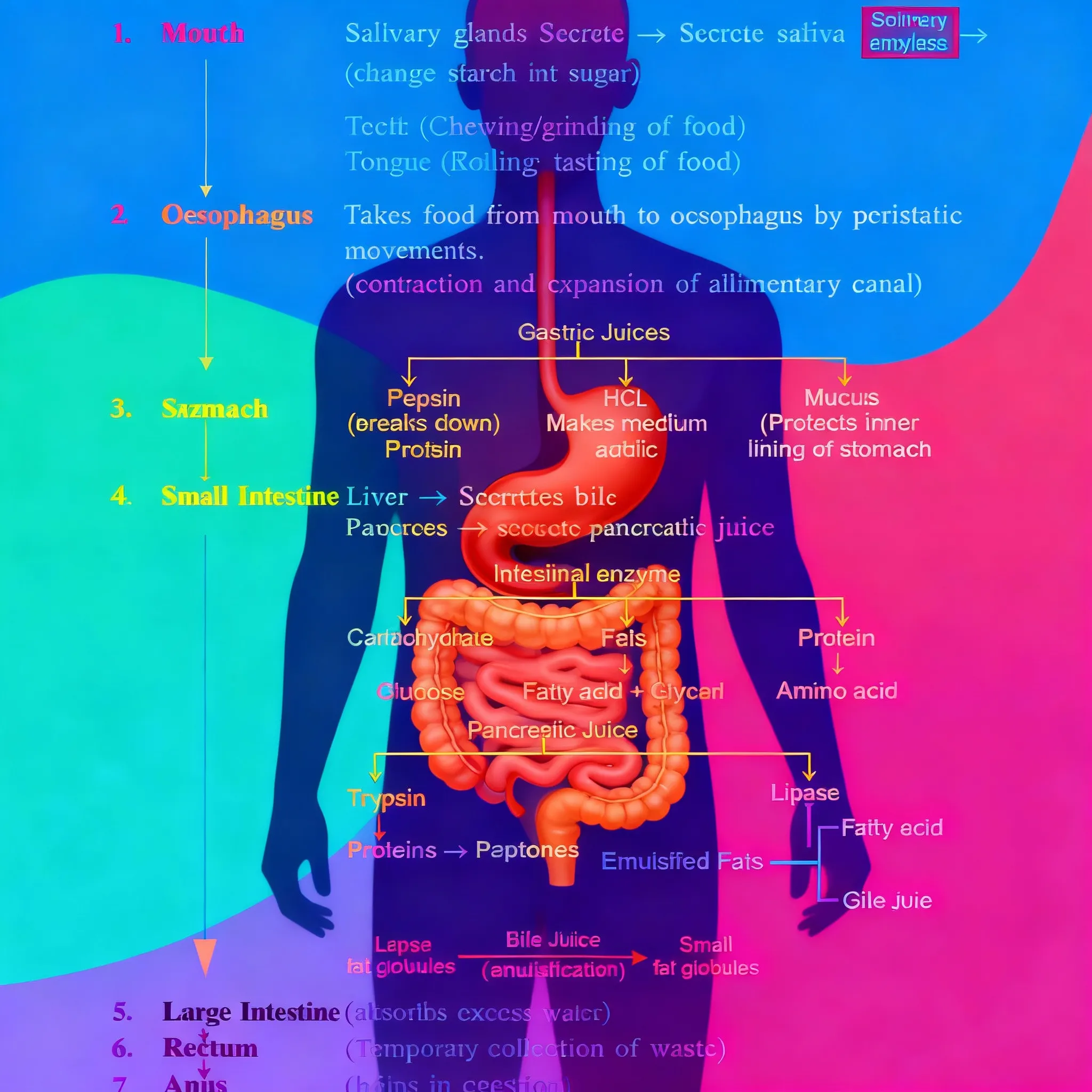
Human Nutrition System
Human digestive system overview
🔄 Process

Stepwise Process with Functions

  • 1
    Mouth
    • Salivary glands secrete saliva (salivary amylase): Starch → Sugar
    • Teeth: Mechanical digestion (chewing)
    • Tongue: Mixing, tasting, swallowing
  • 2
    Oesophagus
    Food is transported via peristalsis (wave-like muscular movement)
  • 3
    Stomach
    • Pepsin: Proteins → Peptides
    • HCl: Provides acidic medium & kills microbes
    • Mucus: Protects stomach lining
  • 4
    Small Intestine
    • Bile (Liver): Emulsifies fats
    • Pancreatic enzymes: Trypsin, lipase, amylase
    • Absorption: Villi increase surface area
    • Carbohydrates → Glucose, Proteins → Amino acids, Fats → Fatty acids + Glycerol
  • 5
    Large Intestine
    Absorbs water and salts, forms feces.
  • 6
    Rectum & Anus

    Rectum: Stores feces
    Anus: Egestion of waste

🔢 Formula

Key Conversion Summary

🌟 Importance
⚠️ Warning
Common Mistakes
🗒️ Case Study

Q: Why does digestion of starch begin in the mouth but not proteins?

Answer: Saliva contains salivary amylase enzyme that breaks starch into maltose sugar. But saliva has no protein-digesting enzymes. Protein digestion starts later in stomach where pepsin works in acidic gastric juice.

⚡ Exam Tip
🧬
Respiration
📖 Introduction
📘 Definition
⚗️ Chemical Equation

Aerobic Respiration Equation

Aerobic Respiration Equation
$$\mathrm{\underset{Glucose}{C_6H_{12}O_6} + 6O_2 \rightarrow 6CO_2 + 6H_2O + \text{Energy (ATP)}}$$
🖼️ Figure
Aerobic Respiration
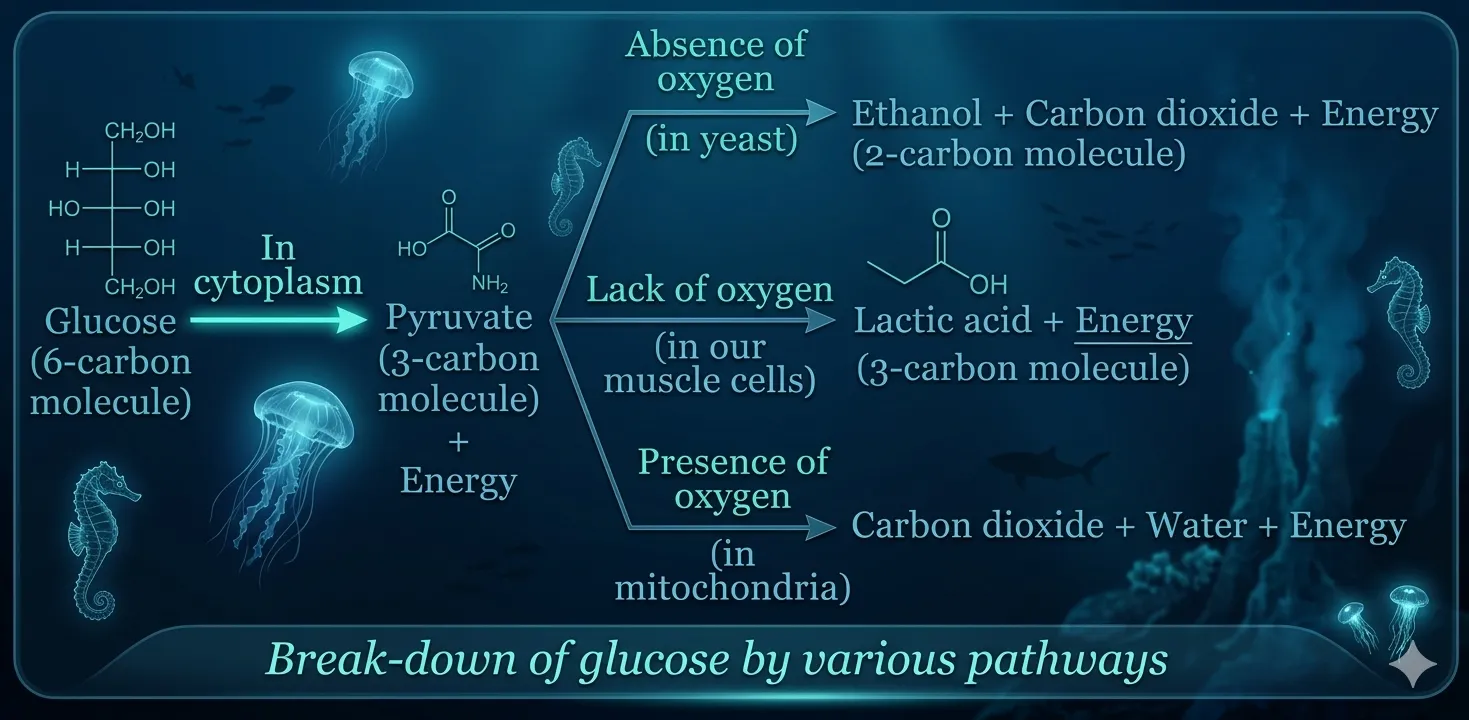
Break-down of Glucose by various pathways
📌 Note

Respiration Process

First step of respiration

In all organisms, the first step of respiration is the breakdown of glucose. Glucose is a six-carbon compound, and it is broken into pyruvate, which is a three-carbon compound. This process takes place in the cytoplasm of the cell.

\[ \text{Glucose} \rightarrow \text{Pyruvate} \]
Fate of pyruvate
In Yeat

In yeast, pyruvate is converted into ethanol and carbon dioxide. This process occurs in the absence of oxygen, so it is called anaerobic respiration or fermentation.

\[ \text{Pyruvate} \rightarrow \text{Ethanol} + \text{CO}_2 \]
In muscle cells

When oxygen is not available in sufficient amount in muscle cells, pyruvate is converted into lactic acid. This is also a form of anaerobic respiration. The accumulation of lactic acid may cause muscle cramps.

\[ \text{Pyruvate} \rightarrow \text{Lactic Acid} \]
In the presence of oxygen

When oxygen is present, pyruvate enters the mitochondria and is broken down completely into carbon dioxide and water. This process is called aerobic respiration, and it releases much more energy.

\[ \text{Pyruvate} + \text{O}_2 \rightarrow \text{CO}_2 + \text{H}_2\text{O} + \text{Energy} \]
Aerobic and anaerobic respiration
Aerobic respiration takes place in the presence of oxygen and releases a much greater amount of energy. Anaerobic respiration takes place without oxygen and releases less energy because the breakdown of glucose is incomplete.
ATP: Energy currency of the cell

The energy released during respiration is used to produce ATP, which stands for Adenosine Triphosphate. ATP stores energy in its bonds and supplies this energy for various cellular activities such as growth, repair, movement, and transport.

When ATP breaks down, a fixed amount of energy is released. This energy is then used by the cell to carry out different activities.

\[ \text{ATP} \rightarrow \text{ADP} + \text{P} + \text{Energy} \]
🗂️ Types / Category
Type of Respiration
Aerobic Respiration
Occurs in the presence of oxygen in mitochondria. Glucose is completely oxidized to CO₂ and H₂O, releasing a large amount of energy (~38 ATP per glucose). Equation: \( \ce{C6H12O6 + 6O2 -> 6CO2 + 6H2O + Energy (38 ATP)} \)
Examples: Human muscle cells during exercise, yeast in open air, plant cells during daytime.
Stages: Glycolysis → Pyruvate oxidation → Krebs cycle → Electron transport chain.
Anaerobic Respiration
Occurs in absence of oxygen (cytoplasm only). Glucose is partially broken down, producing less energy (~2 ATP per glucose) and byproducts like ethanol (in plants/yeast) or lactic acid (in animals).
Equations:
Alcohol fermentation: \( \ce{C6H12O6 -> 2C2H5OH + 2CO2 + Energy (2 ATP)} \)
Lactic acid: \( \ce{C6H12O6 -> 2CH3CH(OH)COOH + Energy (2 ATP)} \)
Examples: Yeast making bread/beer (ethanol), human muscles during sprinting (lactic acid buildup → fatigue).
Advantage: Quick energy when oxygen is limited.
📊 Comparison Table

Types of Respiration

Feature Aerobic Anaerobic
Oxygen Required Not required
End Products CO₂ + H₂O Ethanol / Lactic acid
Energy Yield High (~36 ATP) Low (~2 ATP)
Site Mitochondria Cytoplasm
💡 Concept

Role of ATP

🫁 Steps Involved In Respiration
Breathing (Ventilation)
Breathing is the physical process in which air is taken into the lungs during inhalation and expelled during exhalation.
Gas Exchange
Gas exchange takes place mainly in the alveoli of the lungs and in body tissues, where oxygen and carbon dioxide move by diffusion.
Cellular Respiration
Cellular respiration is the biochemical process in which glucose is broken down inside cells to release energy in the form of ATP.
🌟 Importance
⚠️ Warning
Common Mistakes
📋 Case Study
p> Why do muscle cells produce lactic acid during vigorous exercise?

Answer: Due to lack of oxygen, anaerobic respiration occurs, producing lactic acid which causes cramps.

⚡ Exam Tip
🧬
Human Respiratory System
🧬 Introduction

The human respiratory system helps in the intake of oxygen and removal of carbon dioxide. Oxygen taken in during breathing is used by body cells for respiration and release of energy, while carbon dioxide formed as a waste product is expelled out.

In humans, breathing and gas exchange take place through a well-organised system made up of air passages, lungs, alveoli, blood capillaries, and breathing muscles like the diaphragm. The structure of this system ensures that air reaches deep into the lungs and gases are exchanged efficiently.

🖼️ Figure
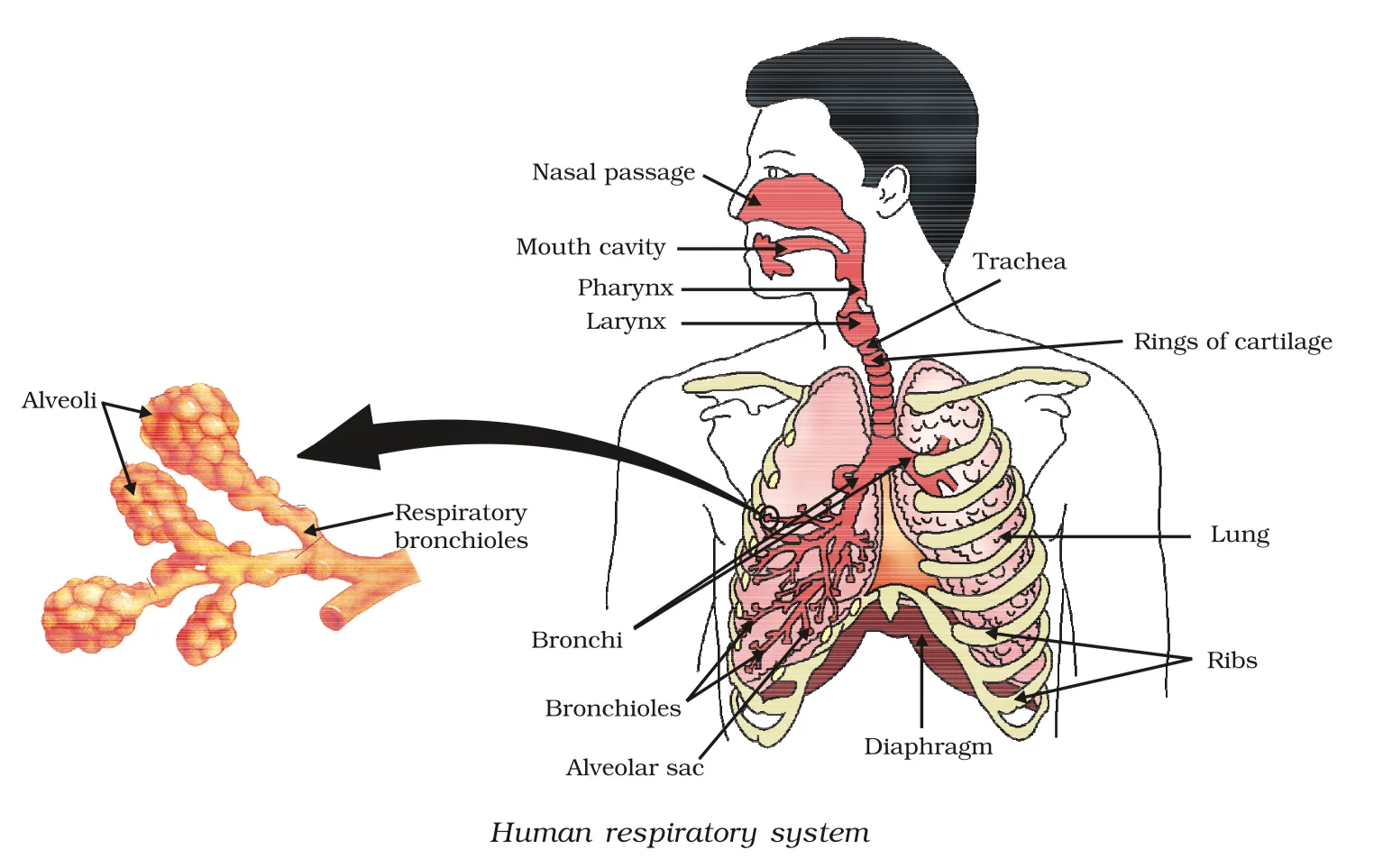
Human respiratory system
Human respiratory system diagram
Human respiratory system
🗂️ Types / Category

Parts of Respiratory System

  • 1
    Nostrils
    External openings of the nose through which air enters the respiratory system. They are the first point of contact with atmospheric air.
  • 2
    Nasal Cavity
    Internal chamber lined with mucous membrane, cilia (hairs), and blood capillaries. Warms, moistens, and filters air by trapping dust and germs.
  • 3
    Pharynx
    Common passage for both air and food. Air from nasal cavity enters pharynx and moves towards larynx. Also called throat.
  • 4
    Larynx
    Voice box located at the top of trachea. Contains vocal cords for sound production. Air passes through a slit called glottis.
  • 5
    Trachea
    Windpipe (about 10-12 cm long). Supported by 16-20 C-shaped cartilage rings that prevent collapse during breathing. Lined with cilia and mucus.
  • 6
    Bronchi
    Trachea divides into two primary bronchi (right slightly shorter, wider). Each bronchus enters one lung and further branches into secondary bronchi.
  • 7
    Bronchioles
    Smaller branches of bronchi (no cartilage). Have smooth muscles that can constrict/dilate to regulate airflow. Lead to alveolar ducts
  • 8
    Alveoli
    Tiny air sacs (about 30 crore in both lungs). Site of gaseous exchange. Thin walls + rich blood supply enable O₂ in, CO₂ out by diffusion.
  • 9
    Lungs
    Pair of spongy organs in thoracic cavity (right has 3 lobes, left has 2). Contain bronchioles and alveoli. Protected by rib cage.
  • 10
    Diaphragm
    Dome-shaped muscular sheet separating thorax from abdomen. Main breathing muscle. Contracts (flattens) during inhalation, relaxes during exhalation
📌 Note

Breathing Mechanism

🖼️ Figure
Alveoli
Structure of alveoli
📌 Note

Transport of Respiratory Gases

🌟 Importance
⚠️ Warning
Common Mistakes
📋 Case Study

Why do smokers have reduced efficiency of gas exchange?

Answer: Due to damage of alveoli, reducing surface area for diffusion.

⚡ Exam Tip
🧬
TRANSPORTATION IN HUMAN BEINGS
🧬 Introduction
Blood transports oxygen, digested food, hormones, and waste materials throughout the body. It maintains body temperature and fights infections. The transportation system needs:
  • Pumping organ: Heart pushes blood
  • Tubes: Arteries, veins, capillaries carry blood
  • Repair system: Platelets stop bleeding
🖼️ Figure
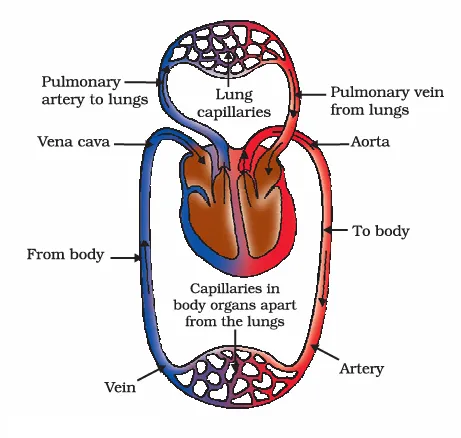
Human Circulatory System
Overview of human circulatory system
Human Circulatory System
🗂️ Types / Category

BLOOD - The Transport Medium

Plasma (55%)
Straw-colored liquid (90% water). Carries nutrients (glucose), CO₂, urea, hormones, proteins in dissolved form. Maintains blood pressure and volume.
Red Blood Cells (RBCs) (45%)
Biconcave disc-shaped cells (7.2 million/mm³). Contain haemoglobin (Fe-containing protein) that binds O₂ in lungs, releases at tissues. Lifespan: 120 days.
White Blood Cells (WBCs) (0.5-1%)
Larger than RBCs (7000/mm³). Body's defense system - fight infections, produce antibodies. Types: Neutrophils (60%), Lymphocytes (30%), Monocytes, Eosinophils, Basophils.
Platelets (2-4 lakh/mm³)
Tiny cell fragments (not complete cells). Essential for blood clotting - form fibrin mesh at injury site to plug wound and stop bleeding within 2-8 minutes.
📌 Note

HEART - The Pumping Organ

Heart is a fist-sized muscular organ that beats 72 times/minute (1,00,000 times/day!). It has 4 chambers to prevent mixing of oxygen-rich and oxygen-poor blood
🔴 Right Side (Deoxygenated Blood)
  • Right Atrium ← Receives deoxygenated blood from superior/inferior vena cava (whole body)
  • Right Ventricle → Pumps to lungs through pulmonary artery
* Thin pulmonary artery walls (low pressure to lungs)
🔵 Left Side (Oxygenated Blood)
  • Left Atrium ← Receives oxygenated blood from pulmonary veins (4 veins from lungs)
  • Left Ventricle → Pumps to whole body through aorta (largest artery)

Key Point: Left ventricle walls 3x thicker (pumps against high body pressure)

* Double door valves prevent backflow
🗂️ Types / Category

🩺 BLOOD VESSELS - The Transport Tubes

Arteries

Carry blood away from heart

  • Thick elastic walls (high pressure)
  • No valves needed
  • Bright red color
Example: Aorta (largest artery)
VEINS

Bring blood back to heart

  • Thin walls (low pressure)
  • Valves prevent backflow
  • Darker red color
Example: Vena cava (largest vein)
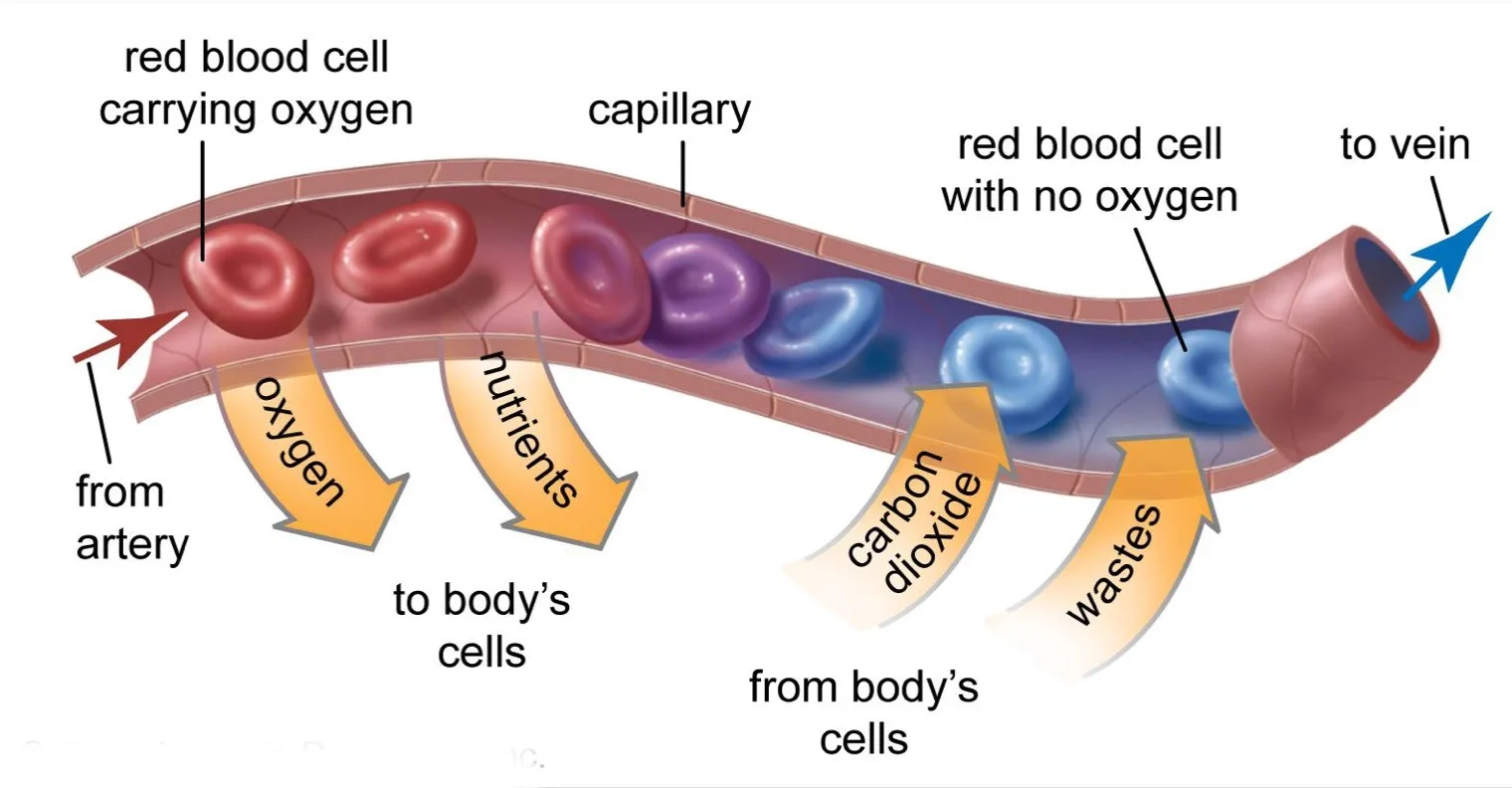
CAPILLARIES

Exchange point between blood & cells

  • 1-cell thick walls
  • Form networks around all cells
  • Where O₂ out, CO₂ in
Example: In liver, muscles, kidneys
🖼️ Figure
Gas Exchange at Tissue Level
Transport and exchange of oxygen and carbon dioxide at tissue level
Gas Exchange at Tissue Level
📌 Note

Platelets - Clotting Helpers

Platelets (thrombocytes) are tiny cell fragments (2-4 lakh/mm³ blood). They help form blood clot when injury occurs.
How Clotting Works?
  • Injury Occurs → Blood vessel breaks, platelets (2-4 lakh/mm³) immediately collect at wound site and stick to damaged area
  • Fibrin Mesh Forms → Platelets release chemicals that convert soluble fibrinogen (plasma protein) into insoluble fibrin threads creating a net-like mesh
  • RBCs Trapped → Fibrin mesh traps red blood cells forming a soft clot that hardens into a scab protecting the wound
  • Bleeding Stops → Complete clotting occurs in 2-8 minutes. Scab falls off after healing (3-7 days)
🖼️ Figure
Blood Vessel Walls Comparison
Cross section comparison of artery, vein and capillary
Blood Vessel Walls Comparison
📌 Note

LYMPH - The Secondary System

Lymph = Plasma that leaks out of capillaries into tissue spaces + fewer proteins (colorless, no RBCs). Carries digested fats from intestine & returns excess tissue fluid to blood.
How Lymph Forms?
  • Plasma leaks from blood capillaries into intercellular spaces due to hydrostatic pressure
  • Forms tissue fluid (lymph) - plasma without RBCs, fewer proteins, straw-colored
  • Collected by blind-ended lymphatic capillaries → lymphatic vessels → lymph nodes
  • Large lymph vessels (thoracic duct) open into subclavian veins near heart

Functions of Lymph

  • Carries digested fats from intestine
  • Removes excess tissue fluid
  • Transports WBCs (immunity)
  • No RBCs (that's why colorless)
🗒️ Important
  • Heart diagram is a 5-mark question
  • Double circulation is frequently asked
  • Differences between arteries and veins are common
⚠️ Warning
Common Mistakes
📋 Case Study

Why is the left ventricle thicker than the right ventricle?

Answer: Because it pumps blood to the entire body at high pressure.

⚡ Exam Tip
🧬
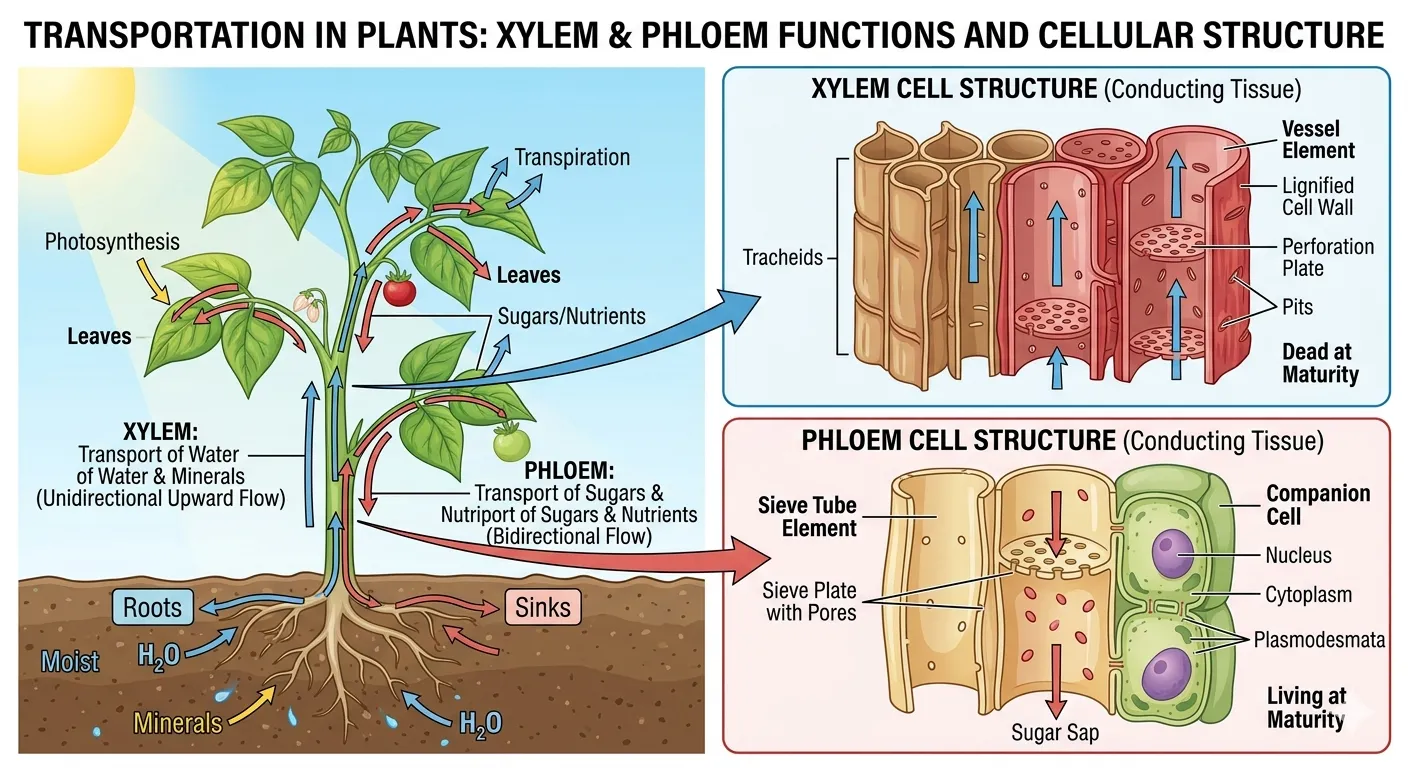
Transportation in Plants
🧬 Introduction
Transportation in plants is the movement of water, minerals, and food through specialized tissues called xylem and phloem.
🗂️ Types / Category
Xylem

Transport of Water + Minerals

  • Xylem: Dead cells (tracheids + vessels with thick lignified walls). Transports water + minerals roots → leaves (unidirectional).
  • Mechanism: Root pressure (active absorption) + transpiration pull (99% force from leaf evaporation).
  • Forces: Cohesion (water molecules stick together) + adhesion (water sticks to xylem walls) creates continuous water column.
  • Can lift water 100m+ in tall trees!
Phloem

Transport of Food (Sucrose)

  • Phloem: Living cells (sieve tubes + companion cells). Transports food (10-15% sucrose solution) both directions.
  • Process: Translocation from source (leaves) → sink (roots/fruits/growing tips).
  • Mechanism: Active transport using ATP → creates high pressure at source → pressure flow to sink areas.
  • Bidirectional = leaves ↔ storage organs!
📌 Note

Transpirational Pull (Cohesion–Tension Theory)

Transpiration Pull = Water evaporation from leaf mesophyll cells through stomata creates suction force that pulls continuous water column from roots to leaves.
  • Water evaporates from mesophyll cells through waxy cuticle → wet cell walls → stomata (99% loss)
  • Creates negative pressure (tension) in leaf xylem = suction force (like sucking through straw)
  • Cohesion (water-water) + adhesion (water-xylem walls) maintains unbroken water column from roots to 100m+ tall trees
  • Main force for water transport (beats root pressure). Loss = 400ml/hr/leaf!
🖼️ Figure
Transportation in Plants
📊 Comparison Table

Difference: Xylem vs Phloem

Feature Xylem Phloem
Complex tissue components Tracheids + Vessels (dead cells) Sieve tubes + Companion cells (living cells)
Material transported Water + Dissolved minerals (0.1-1%) Sucrose solution (10-15%) + amino acids
Direction of transport Unidirectional (roots → leaves) Bidirectional (source ↔ sink)
Cell condition Dead cells (lignified walls) Living cells (sieve plates)
Energy requirement Passive (no ATP) Active transport (ATP required)
Driving force Transpiration pull + Root pressure Pressure flow hypothesis
Transport speed Fast (meters/hour) Slow (cm/hour or less)
🌟 Importance
⚠️ Warning
Common Mistakes
📋 Case Study

Why is transpirational pull more effective than root pressure in tall trees?

Answer: Because it creates a strong continuous suction force capable of lifting water to great heights.

⚡ Exam Tip
🧬
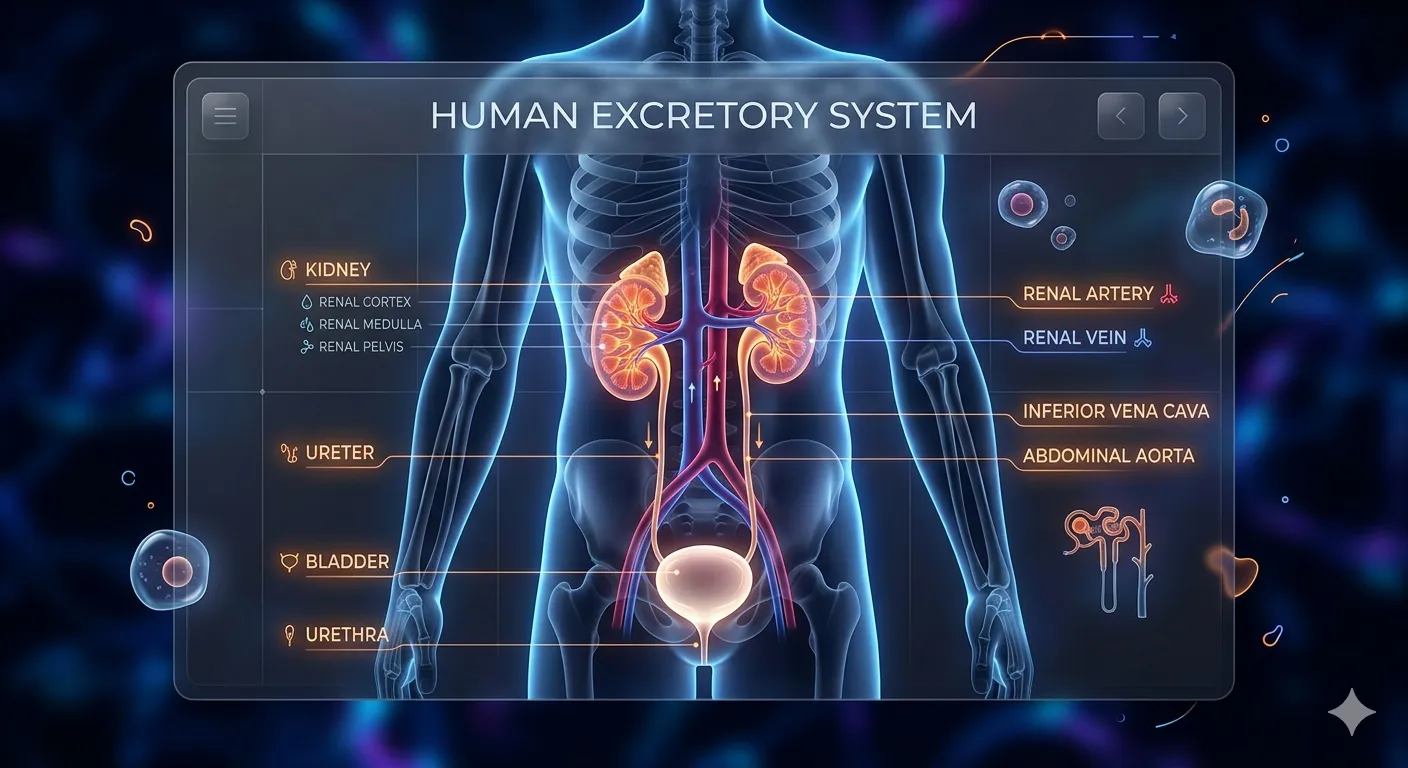
Excretion in Humans
📘 Definition
Excretion is the biological process of removing metabolic wastes such as urea, excess salts, and water to maintain internal balance (homeostasis).
  • 1
    Kidneys
    Filter blood and form urine
  • 2
    Ureters
    Transport urine to bladder
  • 3
    Urinary Bladder
    Stores urine
  • 4
    Urethra
    Eliminates urine
🖼️ Figure
Human excretory system - diagram
Human excretory system
📘 Definition

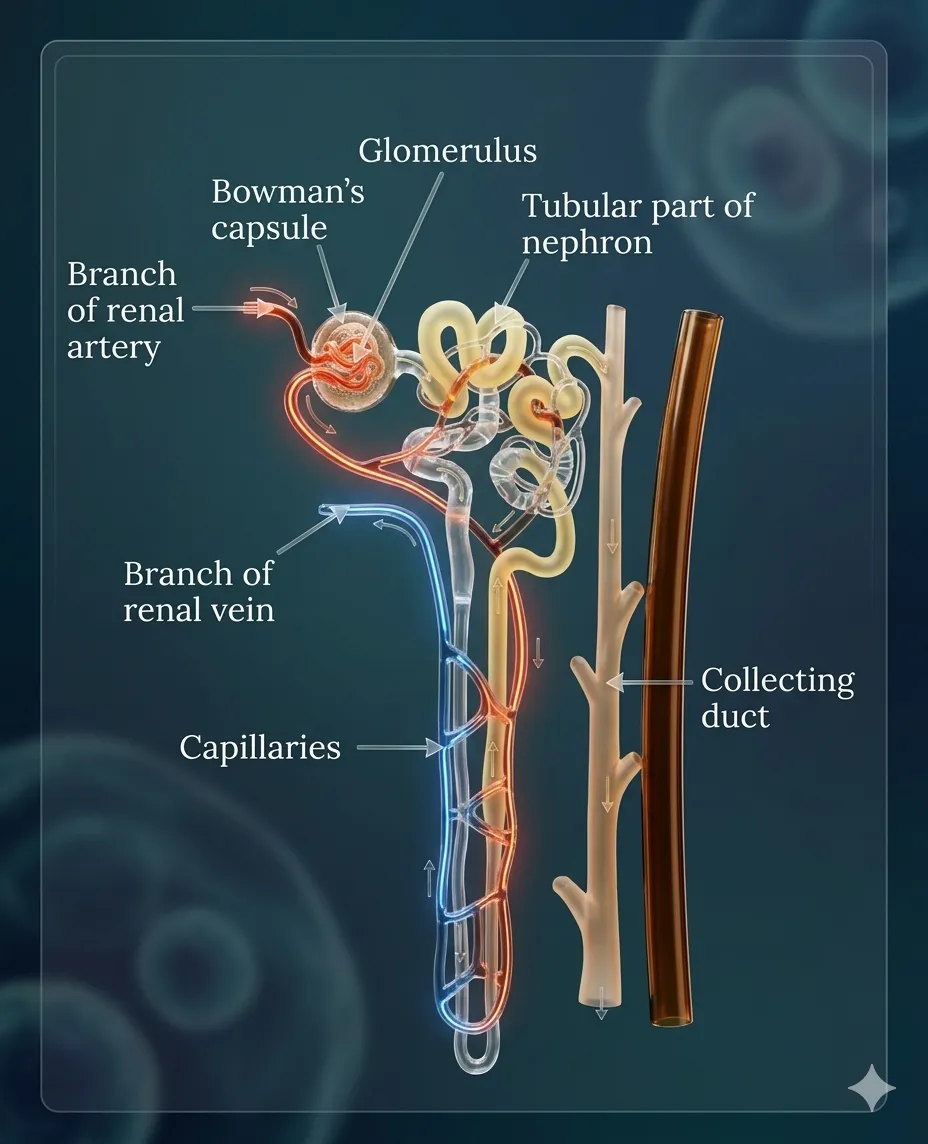
Nephron (Functional Unit)

Nephron = Structural and functional unit of kidney (10 lakh per kidney).
  • Each kidney contains millions of nephrons
  • Composed of glomerulus + Bowman’s capsule + tubule
  • Site of filtration, reabsorption, and secretion
🖼️ Figure
Structure of Nephron
Nephron
Nephron
📌 Note

Function of Kidneys

  • Remove nitrogenous wastes - urea (mammals), uric acid (birds/insects), ammonia (fishes)
  • Maintain water & salt balance (osmoregulation) - adjust urine concentration (50ml-18L/day)
  • Regulate blood pH - remove H⁺ ions, secrete HCO₃⁻ (acid-base balance)
  • Remove excess ions - Na⁺, K⁺, Cl⁻ from diet/metabolic processes
  • Produce hormones - renin (BP regulation), erythropoietin (RBC production)
  • Maintain blood volume & pressure - filter 180L/day, reabsorb 178.5L
  • Detoxify harmful substances - drugs, toxins via liver-kidney axis
🔄 Process

Steps of Urine Formation

  • 1
    Glomerular Filtration
    High pressure (60 mmHg) in glomerulus (capillary tuft) forces water, glucose, amino acids, salts, urea through filtration membrane into Bowman's capsule. Proteins & blood cells stay back. 180L/day filtered.
  • 2
    Proximal Convoluted Tubule (PCT) Reabsorption
    65-70% reabsorption - 100% glucose/amino acids, 70% water/Na⁺, 80% HCO₃⁻ actively reabsorbed into blood capillaries surrounding PCT.
  • 3
    Loop of Henle (Counter Current)
    Water conservation - Descending limb (permeable to water), ascending limb (impermeable to water, pumps NaCl out) creates concentration gradient. 15% water reabsorbed.
  • 4
    Distal Convoluted Tubule (DCT) + Collecting Duct
    Fine-tuning - Variable water reabsorption (ADH hormone), Na⁺/K⁺ balance (aldosterone), pH adjustment. Final urine concentration set here.
  • 5
    Tubular Secretion
    Additional wastes secreted into tubule from blood - H⁺ (pH balance), K⁺, NH₃, creatinine, drugs. Occurs mainly in DCT + collecting ducts.
  • 6
    Urine Storage & Elimination
    1-2L urine/day (1% of filtrate) collects in renal pelvis → ureters → urinary bladder → urethra. Yellow color from urochrome (urea breakdown).
🌟 Importance
⚠️ Warning
Common Mistakes
📋 Case Study

Why does glucose appear in urine of diabetic patients?

Answer: Because excess glucose is not fully reabsorbed in nephron.

⚡ Exam Tip
🧬
Excretion in Plants
📖 Introduction
📘 Definition
🔄 Process

Methods of Excretion in Plants

  • 1
    Diffusion
    Gases O₂, CO₂ diffuse directly through stomata (leaves) and lenticels (stems). Simple process - no energy required. Works for gaseous exchange only.
  • 2
    Transpiration
    Excess water vapour lost from leaves through stomata (99% of water absorbed). Creates transpiration pull - main force for xylem water transport to leaves.
  • 3
    Storage Excretion
    Solid wastes stored in permanent locations - vacuoles (living cells), old leaves, bark, heartwood (dead xylem). Later shed naturally.
  • 4
    Secretion
    Gum, resins, latex, oils secreted by gum glands/resin ducts and stored in dead cells. Rubber tree latex, pine resin are commercial examples.
  • 5
    Shedding (Defoliation)
    Metabolic wastes in old leaves, bark, fruits shed seasonally. Autumn leaf fall carries accumulated wastes away from plant body.
  • 6
    Other Methods
    Exudates: Salt crystals on mangroves (salt excretion). Nectar: Waste sugars attract insects. Crystal formation: Calcium oxalate in leaves.
✏️ Example

Examples of Plant Excretion

  • Oxygen: Released during photosynthesis
  • Carbon dioxide: Released during respiration
  • Resins & gums: Stored in old xylem
  • Latex: Secreted by rubber plants
🌟 Importance
⚠️ Warning
Common Mistakes
📋 Case Study

Why do plants store wastes in leaves instead of removing them immediately?

Answer: Because shedding leaves helps eliminate wastes without harming the plant.

⚡ Exam Tip
✦ NCERT Science · Class X · Chapter 5

Life Processes

An immersive AI-powered learning engine with step-by-step solutions, interactive modules, formulas, and concept builders — all in one place.

8Core Concepts
45+Practice Qs
6Interactive Modules
22Formulas & Facts
🧬
Core Concepts Overview

The seven life processes that define living organisms — organised by biological system.

ℹ️ Life Processes are the basic functions performed by living organisms to maintain their existence. The criteria for life include growth, movement, respiration, reproduction and response to stimuli. Maintenance or repair work that living organisms carry out is termed a life process.
01

What are Life Processes?

All living organisms perform a set of molecular movements that help maintain themselves and counteract environmental damage. These movements constitute life processes.

NCERT 5.1
02

Seven Life Processes

Nutrition · Respiration · Transportation · Excretion · Growth · Reproduction · Movement (Control & Coordination covered in Ch 7).

Overview
03

Why Energy is Needed

All cellular repairs and molecular movements require energy. This energy is obtained by oxidising food (carbon-based molecules) via respiration.

Energy
04

Autotrophs vs Heterotrophs

Autotrophs (plants, algae) synthesise food from inorganic sources. Heterotrophs (animals, fungi) depend on other organisms for organic food.

Nutrition
05

Carbon and Energy Sources

All life processes use carbon compounds as energy sources. Plants fix atmospheric CO₂ into organic molecules. Animals obtain carbon by consuming plants or animals.

Biochemistry
06

Cellular Maintenance

Even when an organism appears inactive, molecular activities continue — repairing damage, replacing old molecules, maintaining ionic concentrations.

Cellular
🌿
Photosynthesis

Green plants absorb sunlight, use CO₂ from air and water from soil to synthesise glucose and release O₂. Occurs in chloroplasts containing chlorophyll. Light reaction occurs in thylakoids; dark reaction (Calvin cycle) in stroma.

🌱
Stomata & Gas Exchange in Leaves

Tiny pores (stomata) on leaf surface regulate gas exchange. Guard cells control opening/closing. CO₂ enters for photosynthesis; O₂ and water vapour exit.

🪱
Heterotrophic Nutrition — Types

Holozoic: Ingest solid food (humans). Saprophytic: Digest dead organic matter externally (fungi). Parasitic: Feed on living host (leeches, Cuscuta). Symbiotic: Mutually beneficial association (Rhizobium–legume).

🧫
Human Digestive System — Journey of Food

Mouth → Oesophagus → Stomach → Small Intestine → Large Intestine → Rectum → Anus. Each organ has specialised enzymes and roles in digestion, absorption, and elimination.

🔬
Role of Digestive Enzymes

Salivary amylase (starch→maltose) · Pepsin/HCl in stomach (protein→peptides) · Trypsin, lipase from pancreas · Bile from liver (emulsifies fats) · Intestinal enzymes complete digestion.

🫁
Aerobic Respiration

Glucose is completely oxidised in the presence of oxygen. Occurs in mitochondria. Produces 36–38 ATP. Glucose → Pyruvate (glycolysis) → Acetyl-CoA → Krebs Cycle → Electron Transport Chain.

⚗️
Anaerobic Respiration

Occurs without oxygen. In yeast: Glucose → Ethanol + CO₂. In human muscles: Glucose → Lactic Acid. Only 2 ATP produced. Lactic acid causes muscle cramps.

🔄
Glycolysis — Common First Step

Occurs in cytoplasm of all cells. 1 glucose (6C) → 2 pyruvate (3C). Net gain of 2 ATP. Does not require oxygen — common to both aerobic and anaerobic pathways.

🫀
Human Respiratory System

Air enters via nostrils → nasal cavity → pharynx → larynx → trachea → bronchi → bronchioles → alveoli. Alveoli are tiny sacs with a rich capillary network for efficient gas exchange by diffusion.

Transport ensures that nutrients, gases, hormones, and waste products move between cells, tissues, and organs.

SystemComponentsFunction
Blood CirculatoryHeart, arteries, veins, capillaries, bloodTransport O₂, nutrients, hormones, CO₂, waste
LymphaticLymph vessels, lymph nodes, lymphReturns tissue fluid; immune defence
Double CirculationPulmonary + Systemic circuitsSeparate oxygenated/deoxygenated blood
Plant XylemTracheid, vessel elementsUpward water and mineral transport
Plant PhloemSieve tubes, companion cellsBidirectional food (sugar) transport
Heart — Four Chambers

The human heart has two atria (receive blood) and two ventricles (pump blood). Valves prevent backflow. The left ventricle has thicker walls as it pumps blood to the entire body (systemic circuit). Blood pressure is measured as systolic/diastolic (normal ≈ 120/80 mmHg).

🫘
Human Excretory System

Kidneys filter blood and produce urine. Each kidney contains about 1 million nephrons — the structural and functional units. Blood is filtered through glomerulus inside Bowman's capsule.

🔬
Nephron — Step-by-Step

① Ultrafiltration in glomerulus (small molecules filtered) → ② Selective reabsorption in tubules (glucose, amino acids, water) → ③ Tubular secretion (H⁺, K⁺) → ④ Concentrated urine collected in renal pelvis → ureter → bladder → urethra.

🌿
Excretion in Plants

Plants excrete oxygen (photosynthesis by-product), CO₂ (respiration by-product), excess water (transpiration), and store waste in vacuoles, dead cells, or in resin/gum/bark. No specialised excretory organ.

🩺
Dialysis — Artificial Kidney

When kidneys fail, dialysis uses a semi-permeable membrane (cellophane tubing) to filter blood outside the body. Blood is passed through dialysing fluid; waste diffuses across the membrane.

⚗️
Equations & Formulas

Key chemical equations, relationships, and memory formulas for Chapter 5.

Photosynthesis

Overall Equation of Photosynthesis
6CO₂ + 6H₂O ──[Light + Chlorophyll]──▶ C₆H₁₂O₆ + 6O₂
In words

Carbon dioxide + Water → (light energy, chlorophyll) → Glucose + Oxygen
Carbon source: CO₂ from air. Hydrogen source: H₂O split by light energy (photolysis).

Respiration Equations

Aerobic Respiration (Complete Oxidation)
C₆H₁₂O₆ + 6O₂ ──▶ 6CO₂ + 6H₂O + Energy (ATP)
Anaerobic Respiration — Yeast (Fermentation)
C₆H₁₂O₆ ──▶ 2C₂H₅OH + 2CO₂ + Energy (2 ATP)
Anaerobic Respiration — Muscles
C₆H₁₂O₆ ──▶ 2C₃H₆O₃ + Energy (2 ATP)
(Glucose) (Lactic Acid)
Glycolysis Summary
Glucose (6C) ──▶ 2 Pyruvate (3C) + 2 ATP + 2 NADH

Digestive Enzyme Reactions

Starch Digestion (Mouth)
Starch ──[Salivary Amylase]──▶ Maltose
Protein Digestion (Stomach)
Proteins ──[Pepsin + HCl]──▶ Proteoses + Peptones
Fat Emulsification (Bile)
Large fat globules ──[Bile Salts]──▶ Small fat droplets (emulsified)
Then: Lipase ──▶ Fatty acids + Glycerol
Final Digestion (Small Intestine)
Maltose ──[Maltase]──▶ Glucose + Glucose Peptides ──[Peptidase]──▶ Amino Acids Fats ──[Lipase]──▶ Fatty Acids + Glycerol

Transport & Excretion Relationships

Blood Pressure
BP = Cardiac Output × Peripheral Resistance Normal: 120 mmHg (systolic) / 80 mmHg (diastolic)
Excretory Product Composition (Urine)
Urea : Uric Acid : Creatinine : Salts : Water (~96% water, ~2% urea, ~2% other solutes)
Transpiration Pull (Plants)
Water potential gradient: Root → Stem → Leaf → Air Cohesion-tension mechanism drives water upward against gravity

Key Values to Memorise

ParameterValue / Fact
ATP produced — Aerobic36–38 ATP per glucose molecule
ATP produced — Anaerobic2 ATP per glucose molecule
Number of nephrons per kidney~1 million
Normal blood pressure (adult)120/80 mmHg
Wavelength absorbed by chlorophyll a430 nm (blue) and 680 nm (red)
Gastric pH1.5 – 3.5 (strongly acidic)
Alveolar surface area (lungs)~70 m² (tennis court size)
Glomerular filtration rate (GFR)~125 mL/min (180 L/day filtered)
🔍
Step-by-Step AI Solver

Choose a question type or topic, and get a complete worked solution with every logical step explained.

🤖 This solver is fully built-in — no API key needed. Select a problem below and click Solve Step-by-Step for a complete guided solution.
📋
Concept-Building Questions

Original questions organised by concept — with full step-by-step solutions. Not from the textbook.

Short Answer A plant is placed in a sealed glass jar containing CO₂-free air. After several hours in sunlight, it wilts and dies. Explain why, even though it has light and water. [3M] +
1
Identify the missing raw material
Photosynthesis requires CO₂ + H₂O + light + chlorophyll. The jar has no CO₂, so the carbon source is absent.
2
Consequence for photosynthesis
Without CO₂, the Calvin cycle (dark reaction) cannot fix carbon → no glucose is produced, even if light reactions proceed briefly.
3
Why the plant dies
The plant continues cellular respiration, consuming its stored food reserves. With no new glucose input and CO₂ accumulating from respiration (though CO₂ removed initially), food reserves deplete → plant wilts and dies.
✔ Key Conclusion
CO₂ is an essential raw material. Without it, photosynthesis stops and the plant starves despite having light and water.
MCQ Which part of a chloroplast is the site of the light-independent reactions (Calvin cycle)? [1M] +
✔ Correct Answer
(B) Stroma — The stroma is the fluid-filled matrix of the chloroplast where CO₂ fixation occurs. Light reactions occur on the thylakoid membranes.
Long Answer An experiment tests photosynthesis rate in a submerged aquatic plant by counting oxygen bubbles at different light intensities. Predict and explain the results, including the concept of limiting factors. [5M] +
1
Set up the pattern
At low light intensity → few bubbles. As light increases → bubble rate increases proportionally. At very high light intensity → bubble rate plateaus.
2
Explain rising phase
Light is the limiting factor. More photons → more photoexcitation of chlorophyll → more ATP and NADPH → more carbon fixation → more glucose and O₂ released.
3
Explain plateau (saturation)
At saturation, light is no longer the limiting factor. CO₂ concentration or enzyme (RuBisCO) capacity becomes limiting — adding more light doesn't help. Bubble rate stays constant.
4
Limiting factor concept
Blackman's Law: The rate of a process is limited by its slowest factor. When light is limiting → raise light. When CO₂ is limiting → raise CO₂. Temperature affects enzyme rates.
5
Graph description
A graph of bubble count vs. light intensity shows a linear increase, then a curve that levels off — forming an S-like saturation curve.
✔ Marks Breakdown
Pattern prediction (1) + Rising phase explanation (1) + Plateau/saturation explanation (1) + Limiting factor law (1) + Application to CO₂/temperature (1) = 5 marks
Assertion-Reason Assertion: Leaves appear green even though they contain multiple pigments. Reason: Chlorophyll reflects green light while absorbing other wavelengths. [1M] +
1
Evaluate Assertion
TRUE — Leaves contain chlorophyll a, chlorophyll b, carotenoids, xanthophylls. Despite multiple pigments, green is dominant colour.
2
Evaluate Reason
TRUE — Chlorophyll strongly absorbs blue (~430 nm) and red (~680 nm) light for photosynthesis, and reflects green (~530 nm) — which is what we see.
3
Is Reason the correct explanation?
YES — The reflection of green wavelengths by chlorophyll is precisely why leaves look green. Reason correctly explains the Assertion.
✔ Answer
Both A and R are true, and R is the correct explanation of A. → Option (a)
Short Answer A student holds their breath for 1 minute. Explain what happens in their muscle cells during this time and what they feel afterward. [3M] +
1
O₂ supply cut off
When breath is held, no new O₂ reaches tissues. Blood O₂ drops; CO₂ rises. Muscles still need energy for any activity.
2
Switch to anaerobic respiration
Muscles switch to anaerobic pathway: Glucose → Lactic acid + 2 ATP. This provides energy temporarily without O₂.
3
Aftermath — cramps and deep breaths
Accumulated lactic acid lowers pH in muscles → muscle cramps. When breath resumes, deep rapid breathing supplies O₂ to oxidise lactic acid back to CO₂ and H₂O (oxygen debt repaid).
✔ Key Point
Anaerobic respiration → lactic acid build-up → cramps. O₂ debt repaid by deep breathing afterward.
MCQ In which part of the cell does glycolysis take place? [1M] +
✔ Answer
(C) Cytoplasm — Glycolysis occurs in the cytosol and does NOT require mitochondria, making it common to all organisms (prokaryotes lack mitochondria but still perform glycolysis).
Long Answer Explain how the human respiratory system is adapted for efficient gas exchange. Include the role of alveoli, surfactant, and blood supply. [5M] +
1
Structure of alveoli
Alveoli are tiny balloon-like sacs at the end of bronchioles. A human has ~300 million alveoli, giving a total surface area of ~70 m² — maximising gas exchange.
2
Thin walls for diffusion
Alveolar walls are only one cell thick (squamous epithelium), minimising the diffusion distance for O₂ and CO₂.
3
Rich capillary network
Each alveolus is surrounded by a dense network of capillaries. This maintains a steep concentration gradient: O₂ high in alveolus → diffuses into blood; CO₂ high in blood → diffuses into alveolus.
4
Role of surfactant
Surfactant (phospholipid layer) prevents alveoli from collapsing by reducing surface tension. Without it (as in premature babies), breathing becomes very difficult (respiratory distress syndrome).
5
Breathing mechanism
Diaphragm contracts → chest volume increases → air pressure in lungs decreases → air rushes in (inspiration). Reverse for expiration. This ventilation maintains fresh air in alveoli for continuous diffusion.
✔ Adaptations Summary
Large surface area (300M alveoli) + thin walls (1 cell) + rich capillaries + surfactant + continuous ventilation = maximum gas exchange efficiency.
Short Answer Why is bread dough soft and fluffy after kneading and leaving it for some time? What life process is responsible? [2M] +
1
Identify the organism
Yeast cells are added to bread dough. Yeast is a unicellular fungus capable of anaerobic respiration.
2
Process: Fermentation
Yeast performs anaerobic fermentation: Glucose → CO₂ + Ethanol + energy. The CO₂ gas gets trapped in the gluten network of the dough.
3
Why fluffy?
Trapped CO₂ bubbles expand → dough rises and becomes soft and porous (fluffy). Ethanol evaporates during baking.
✔ Answer
Anaerobic respiration (fermentation) by yeast produces CO₂ that makes dough rise and become fluffy.
Long Answer Trace the complete journey of a glucose molecule from the time it is absorbed in the intestine to when it is fully oxidised in a liver cell. [5M] +
1
Absorption in small intestine
Glucose is absorbed by active transport into villi epithelial cells → enters capillaries of the villus → into the hepatic portal vein.
2
Journey to the liver
Hepatic portal vein → liver. Liver may store glucose as glycogen (glycogenesis), convert it to fat, or release it into circulation depending on body needs.
3
Entering systemic blood circulation
Glucose enters the hepatic vein → inferior vena cava → right heart → lungs → left heart → aorta → reaches all cells including liver cells.
4
Glycolysis in cytoplasm
Glucose → 2 pyruvate + 2 ATP + 2 NADH in cytoplasm. No O₂ needed for this step.
5
Aerobic oxidation in mitochondria
Pyruvate enters mitochondria → Acetyl-CoA → Krebs cycle → electron transport chain → CO₂ + H₂O + 36–38 ATP released as energy.
✔ Journey Summary
Intestine → portal blood → liver → systemic blood → liver cell cytoplasm (glycolysis) → mitochondria (aerobic oxidation) → CO₂ + H₂O + ATP.
Short Answer Why does the stomach not digest itself? What protects it? [3M] +
1
The problem
The stomach secretes HCl (pH 1.5–2) and pepsin, which can digest protein. Stomach wall is protein — so why doesn't it digest itself?
2
Mucus layer protection
Goblet cells in the stomach lining secrete a thick layer of mucus that forms a physical and chemical barrier between HCl/pepsin and the stomach wall.
3
Pepsin secreted as pepsinogen
Pepsin is secreted in an inactive form called pepsinogen, which only becomes active (pepsin) when it contacts HCl. This prevents premature digestion in secretory cells.
4
When protection fails
If mucus production decreases (due to stress, NSAIDs, H. pylori bacteria), acid erodes the wall → peptic ulcer.
✔ Answer
Mucus lining + secretion of enzymes in inactive forms (pepsinogen) protect the stomach from self-digestion.
MCQ Which organ produces bile, and where is it stored? [1M] +
✔ Answer
(B) Bile is produced by the liver and stored in the gall bladder. It is released into the duodenum when fatty food enters, to emulsify fats.
Long Answer Why do humans need a four-chambered heart, while fish can survive with a two-chambered one? Relate your answer to metabolic demands. [5M] +
1
Fish: Two-chambered heart
Fish have a 1 atrium + 1 ventricle heart. Blood flows: heart → gills (oxygenation) → body tissues → heart. This is single circulation. Deoxygenated and oxygenated blood mix to some extent.
2
Fish are ectotherms — lower demand
Fish are cold-blooded (ectotherms) — they don't maintain body temperature. Lower metabolic rate → less O₂ demand → single circulation is sufficient.
3
Humans: Four-chambered heart
Humans have 2 atria + 2 ventricles → complete double circulation: Pulmonary (heart→lungs→heart) and Systemic (heart→body→heart). Oxygenated and deoxygenated blood never mix.
4
Humans are endotherms — high demand
Humans maintain constant body temperature (37°C) → high metabolic rate → need highly oxygenated blood delivered efficiently → double circulation ensures this.
5
Advantage of four chambers
Pure oxygenated blood goes to the body and pure deoxygenated blood to the lungs. Pressure in each circuit can be optimised. Left ventricle is thicker for high systemic pressure.
✔ Key Point
Number of heart chambers correlates with metabolic need and thermoregulation. Endothermy demands efficient double circulation → four-chambered heart.
Short Answer If you cut a ring of bark (including phloem) from a tree trunk, the tree eventually dies. Explain why, even though roots are intact. [3M] +
1
What bark contains
The bark includes the phloem — the vascular tissue responsible for transporting sugars (food) from leaves (source) to all other parts including roots (sink).
2
Roots starve
With phloem removed, sugar made in leaves cannot reach the roots. Roots depend on phloem for energy. Without food, root cells die → cannot absorb water and minerals → whole plant dies.
3
Xylem is intact but insufficient
Xylem (in wood, deeper) is uncut — water still rises. But without energy supply to root cells and without phloem completing the cycle, the plant cannot survive.
✔ Answer
Girdling removes phloem → food can't reach roots → roots starve and die → water absorption fails → whole tree dies. This is called girdling or ringing.
Long Answer A person drinks 2 litres of water within an hour. Predict and explain what changes occur in their urine volume, concentration, and composition over the next few hours. [5M] +
1
Blood becomes dilute
Excess water absorbed from intestine → blood plasma becomes more dilute (lower osmolarity). Blood volume increases temporarily.
2
ADH suppression
Hypothalamus detects low blood osmolarity → signals posterior pituitary to reduce ADH (antidiuretic hormone) secretion. ADH normally promotes water reabsorption in kidney tubules.
3
Kidney response
With less ADH, distal convoluted tubule and collecting duct become less permeable to water → less water reabsorbed → more water excreted in urine.
4
Predicted urine changes
Urine volume increases significantly. Urine becomes pale/colourless (dilute). Urea and salt concentrations in urine decrease (same amount of waste, more water).
5
Return to normal
Over 2–3 hours, excess water excreted → blood osmolarity returns to normal → ADH levels restore → urine concentration normalises. The system uses negative feedback.
✔ Conclusion
Excess water → dilute blood → ↓ADH → ↓water reabsorption → ↑dilute urine → blood osmolarity restored (negative feedback loop).
MCQ Which of the following is correctly matched as the structural and functional unit of the kidney? [1M] +
✔ Answer
(C) Nephron — Each kidney has ~1 million nephrons. The nephron is the complete unit performing filtration, reabsorption, secretion, and concentration of urine.
Short Answer Why do desert animals produce very concentrated urine, while aquatic animals produce dilute urine? [3M] +
1
Desert animals — water scarcity
Desert animals (kangaroo rat, camel) have very limited water availability. They must conserve water at all costs. Their kidneys reabsorb maximum water → very concentrated, small-volume urine.
2
Adaptation: long loop of Henle
Desert mammals have a very long Loop of Henle → more time and surface area for water reabsorption from filtrate → higher urine concentration.
3
Aquatic animals — water surplus
Freshwater animals (fish, frogs) are surrounded by water. Osmosis constantly draws water into their bodies. They excrete large volumes of dilute urine to expel excess water and maintain osmotic balance.
✔ Principle
Urine concentration is an adaptation to water availability. Controlled by ADH, length of Loop of Henle, and osmotic pressure of blood.
💡
Tips, Tricks & Common Mistakes

Exam-tested tips and the most frequently made errors in CBSE Class X assessments.

💡
Photosynthesis equation — balance it

Always write the balanced equation: 6CO₂ + 6H₂O → C₆H₁₂O₆ + 6O₂. The "6" before each molecule is essential in board exams. Missing coefficients = missing marks.

🎯
Aerobic vs Anaerobic — ATP numbers

Aerobic = 36–38 ATP; Anaerobic = 2 ATP. Examiners love this comparison. Always include ATP count when comparing the two types.

🔑
Nephron vs Kidney — distinguish clearly

Kidney = organ. Nephron = structural and functional unit of kidney. Never call the nephron a "kidney unit" — be precise. There are ~1 million nephrons per kidney.

📐
Double circulation — name both circuits

Always name BOTH circuits: (1) Pulmonary circulation (heart → lungs → heart) and (2) Systemic circulation (heart → body → heart). State that they prevent mixing of oxygenated and deoxygenated blood.

🌿
Plant transport — direction matters

Xylem: ALWAYS upward (roots → leaves, unidirectional). Phloem: BIDIRECTIONAL (source to sink — can be up or down). This distinction is a classic 2-mark question.

🧪
Enzyme specificity in digestion

Link each enzyme to its substrate and location: Salivary amylase (mouth, starch), Pepsin (stomach, protein), Lipase (small intestine, fats), Maltase (small intestine, maltose). This is a very common fill-in-the-table question.

Glycolysis — no oxygen needed

Glycolysis occurs in the cytoplasm and does NOT need oxygen. It is the first step in BOTH aerobic and anaerobic respiration. This is a favourite trick question: "Glycolysis is aerobic." — FALSE.

🏥
Dialysis question framing

When explaining dialysis, use the analogy: blood (inside tube) = one side; dialysing fluid (outside) = other side; semi-permeable membrane (cellophane) = kidney filtration. Draw/describe the concentration gradient for urea.

⚠️
Mistake: Saying stomata "produce" oxygen

Stomata are merely pores that allow gas EXCHANGE. Oxygen is PRODUCED by splitting water molecules during photolysis in the light reaction. Stomata only provide an exit route.

⚠️
Mistake: Confusing arteries and veins by O₂ content

Arteries carry blood FROM the heart (not necessarily oxygenated). The pulmonary artery carries DEOXYGENATED blood. Always define by direction, not O₂ level. Artery = away from heart.

⚠️
Mistake: Writing lactic acid formula as C₃H₆O₃ without context

While the formula C₃H₆O₃ is correct for lactic acid, many students forget to mention it is produced in MUSCLE CELLS during anaerobic respiration — not in ALL cells. Yeast produces ethanol, not lactic acid.

⚠️
Mistake: Treating transpiration as excretion

Transpiration is loss of water vapour through stomata — it is primarily a physical process related to water transport, NOT excretion. Excretion involves removal of metabolic WASTE. Water is not a metabolic waste per se.

⚠️
Mistake: Saying bile "digests" fats

Bile does NOT digest fats — it EMULSIFIES them (breaks large fat globules into smaller droplets, increasing surface area). Actual fat digestion is done by lipase enzymes. This distinction earns/loses 1 mark.

⚠️
Mistake: Confusing glomerulus and nephron

Glomerulus = a tuft of capillaries inside Bowman's capsule — only ONE part of the nephron. The nephron is the COMPLETE unit including Bowman's capsule, PCT, loop of Henle, DCT, and collecting duct.

⚠️
Mistake: Thinking plants only photosynthesise

Plants ALSO respire (all the time, 24/7). During daytime, photosynthesis rate > respiration rate, so net gas exchange appears to be CO₂ in / O₂ out. But plants always consume O₂ and release CO₂ via respiration.

GLAD-MER
The 7 life processes:
Growth · Locomation/Movement · Assimilation · Digestion · Metabolism (Respiration) · Excretion · Reproduction
SHGPLD
Digestive organ order: Stomach → sHort intestine → sGastric → Pancreas → Liver → Duodenum

Simpler version: "My Older Sister Sits Peacefully Like Royalty"
Mouth → Oesophagus → Stomach → Small intestine → Pancreas (assists) → Large intestine → Rectum
GALA Trip
Nephron parts in order:
Glomerulus → Bowman's CApsule → Proximal Loop (PCT) → Loop of Henle → Distal Collecting (DAT) → Collecting Tube → Renal Pelvis
AEL
Photosynthesis inputs vs outputs:
In: CO₂ · H₂O · Light · Chlorophyll
Out: Glucose · O₂
Remember: Air (CO₂) + Earth (H₂O) + Light → Life (Glucose) + Oxygen
🎮
Interactive Learning Modules

Test your knowledge with flashcards, quick quiz, fill-in-the-blank, and matching exercises.

Question 1 of 10
🃏 Click the card to flip and reveal the answer. Use arrows to navigate between cards.
TERM — click to reveal answer
ANSWER
1 / 12
🔗 Click a term on the left, then click its matching definition on the right.
🗂️ Drag-or-click each item to classify it into the correct category.
🖊️
Concept Diagrams & Flow Charts

Visual representations of key processes — labelled and colour-coded for clarity.

Photosynthesis — Light & Dark Reactions

THYLAKOID (Light Reactions) STROMA (Calvin Cycle) Light H₂O + Chlorophyll ATP + NADPH O₂ released ATP+NADPH CO₂ fixed by RuBisCO enzyme Glucose (C₆H₁₂O₆) Starch / Sucrose 6CO₂ + 6H₂O → C₆H₁₂O₆ + 6O₂

Respiration Pathways — Aerobic & Anaerobic

Glucose (C₆H₁₂O₆) Glycolysis (Cytoplasm — no O₂ needed) 2 Pyruvate + 2 ATP + 2 NADH Anaerobic (Yeast) Ethanol + CO₂ 2 ATP total Anaerobic (Muscle) Lactic Acid 2 ATP total Aerobic (Mitochondria) CO₂ + H₂O + 36–38 ATP (Krebs + ETC) +O₂ No O₂ No O₂

Human Heart — Four Chambers & Double Circulation

Right Atrium Right Ventricle Left Atrium Left Ventricle (thicker wall) Pulmonary A. (to lungs) Pulmonary V. (from lungs) Aorta → Body Vena Cava ← Body Deoxygenated Oxygenated ⟵ Lungs →

Nephron — Functional Unit of Kidney

Glomerulus (filtration) Bowman's Capsule Afferent Efferent PCT (Proximal CT) Loop of Henle DCT (Distal CT) Collecting Duct → Renal Pelvis Steps: Filtration → Reabsorption → Secretion → Urine Blood filtered 60×/day · 180L filtered → ~1.5L urine produced

Human Digestive System — Food Journey

Mouth Salivary amylase Oesophagus Peristalsis Stomach HCl + Pepsin Liver (Bile) Pancreas (Trypsin, Lipase) Small Intestine Final digestion + Absorption Large Intestine Water reabsorption Rectum Faeces stored Anus Absorption in Small Intestine • Villi increase surface area • Glucose + Amino acids → Blood • Fatty acids + Glycerol → Lymph (lacteals) • Length ~6–7 metres for max absorption • Microvilli (brush border) further ↑ area
📚
ACADEMIA AETERNUM तमसो मा ज्योतिर्गमय · Est. 2025
Sharing this chapter
Life Processes Class 10 Notes | Chapter 5 Quick Revision
Life Processes Class 10 Notes | Chapter 5 Quick Revision — Complete Notes & Solutions · academia-aeternum.com
The "Life Processes" chapter explores the essential functions that distinguish living organisms from non-living things. Core life processes include nutrition, respiration, transportation, and excretion—all vital for growth, energy production, maintenance, and waste removal in both plants and animals. These processes ensure the survival and proper functioning of living beings, even when they are at rest. Through this chapter, students learn how living organisms obtain food, produce energy,…
🎓 Class 10 📐 Science 📖 NCERT ✅ Free Access 🏆 CBSE · JEE
Share on
academia-aeternum.com/class-10/science/life-processes/notes/ Copy link
💡
Exam tip: Sharing chapter notes with your study group creates a reinforcement loop. Teaching a concept is the fastest path to mastering it.

Recent posts

    Get in Touch

    Let's Connect

    Questions, feedback, or suggestions?
    We'd love to hear from you.